Water Damage Restoration in North End, RI
The North End is the part of Newport north of downtown and the Pell Bridge ramps, around Admiral Kalbfus Road, Hillside Avenue, and Miantonomi Park, running up to the Navy base at Coddington Cove. It is the newest part of the city. Most of the housing went up from the 1940s through the 1960s for Navy families and shipyard workers, in wood-frame duplexes, garden apartments, and small single-family houses on block foundations, with public housing and newer townhouses mixed in.
The water problems here are different from the Point's. Block basements and slab-on-grade houses take groundwater at the footing and surface water at the door, and 1950s galvanized plumbing is at the end of its life. Streets on the low ground toward the cove and along the bridge approach pond in heavy rain, and the older apartment buildings share risers, so a failure on the third floor reaches the first.
This site puts North End homeowners and landlords through by phone to an independent local water damage provider.
North End water damage in a 1950s duplex on a block foundation
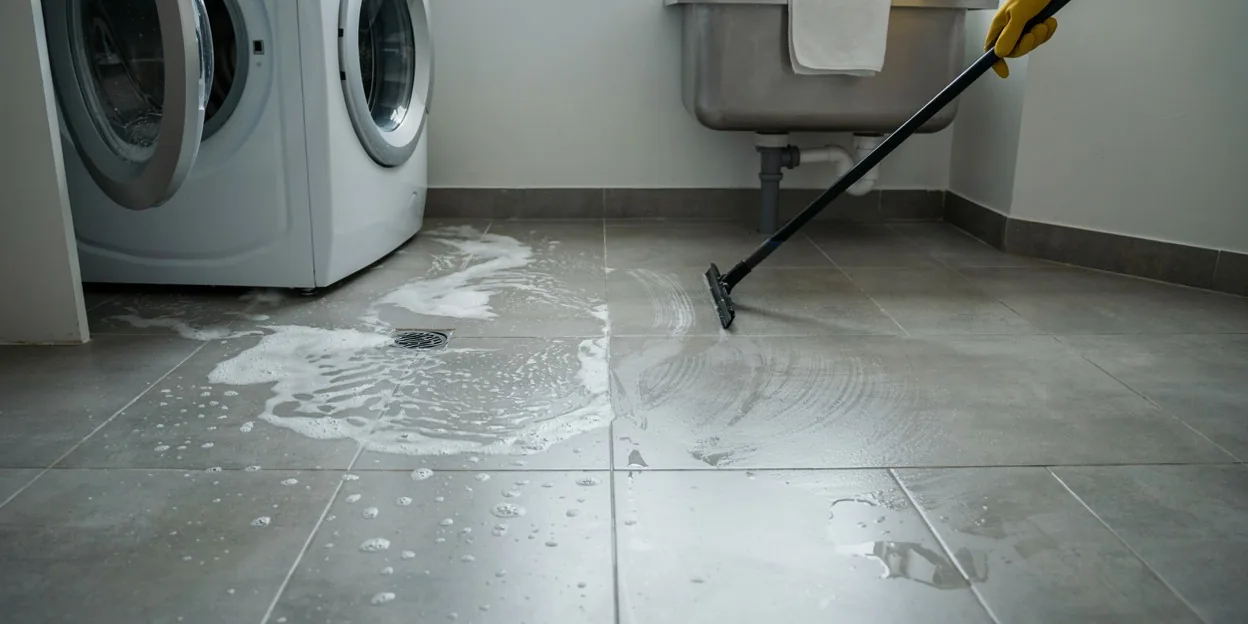
A corroded galvanized line or a failed washer hose is burst pipe water damage. Standing water on a slab or in a block basement starts with water extraction. Once the water is out, structural drying runs against the readings until the framing and the drywall are back to normal.
The base next door
Naval Station Newport occupies the shore from Coasters Harbor Island north past Coddington Cove, and much of the North End was built to house the people who worked there. Off-base housing owned by Navy families follows the same city permit rules as any other house in Newport.
Call (401) 560-5802 and say which floor is wet and whether the building has other units. An independent local water damage provider serving the North End takes the call.
Services Available in North End
Water Extraction
Standing water pulled off wide pine boards, tile, brick, and dirt cellar floors on any level of an old Newport house, then the first moisture readings.
Structural Drying
Air movers and dehumidifiers run by daily readings until plaster, lath, old timber, and subfloor come back to dry numbers in salt air.
Storm Surge and Coastal Flood Cleanup
Harbor or bay water that came in during a nor'easter or hurricane pumped out, contaminated material removed, and the ground floor dried.
Stone Cellar Flooding Cleanup
Water pumped out of a fieldstone or rubble cellar, the source traced to a joint, a drain, or the tide, and the stone and framing above it dried.
Frozen Pipe Cleanup
Cleanup after a supply line froze in an uninsulated wall, a crawl space, or a shut-up summer house and split, then drying of what the thaw soaked.
Burst Pipe Water Damage
A failed supply line, corroded fitting, or split radiator line shut off, the water pulled out, and the floors and plaster below it dried.
Roof Leak and Ice Dam Water Damage
Wet attic insulation, plaster ceilings, and walls dried after a slate slipped, an ice dam backed up at the eave, or a nor'easter drove rain under the flashing.
Ceiling Water Damage Repair
A stained, sagging, or dropped plaster ceiling opened, the cavity above it dried, and the source found before anyone patches it.